It’s saving money. But that’s about it.
The auditor-general’s inquiry into David Seymour’s cost-cutting revamp of the free school lunches programme reveals a process beset by poor planning and inadequate monitoring, with little evidence that waste is being reduced or nutritional requirements met.
“The Ministry [of Education] was not able to show that it was delivering value for money, because while it was saving money on the programme, it was not meeting the other goals that it was seeking for itself,” said the Audit Office’s inquiries manager David Lemmon in comments made to accompany the release of the inquiry, which was tabled in parliament this afternoon.
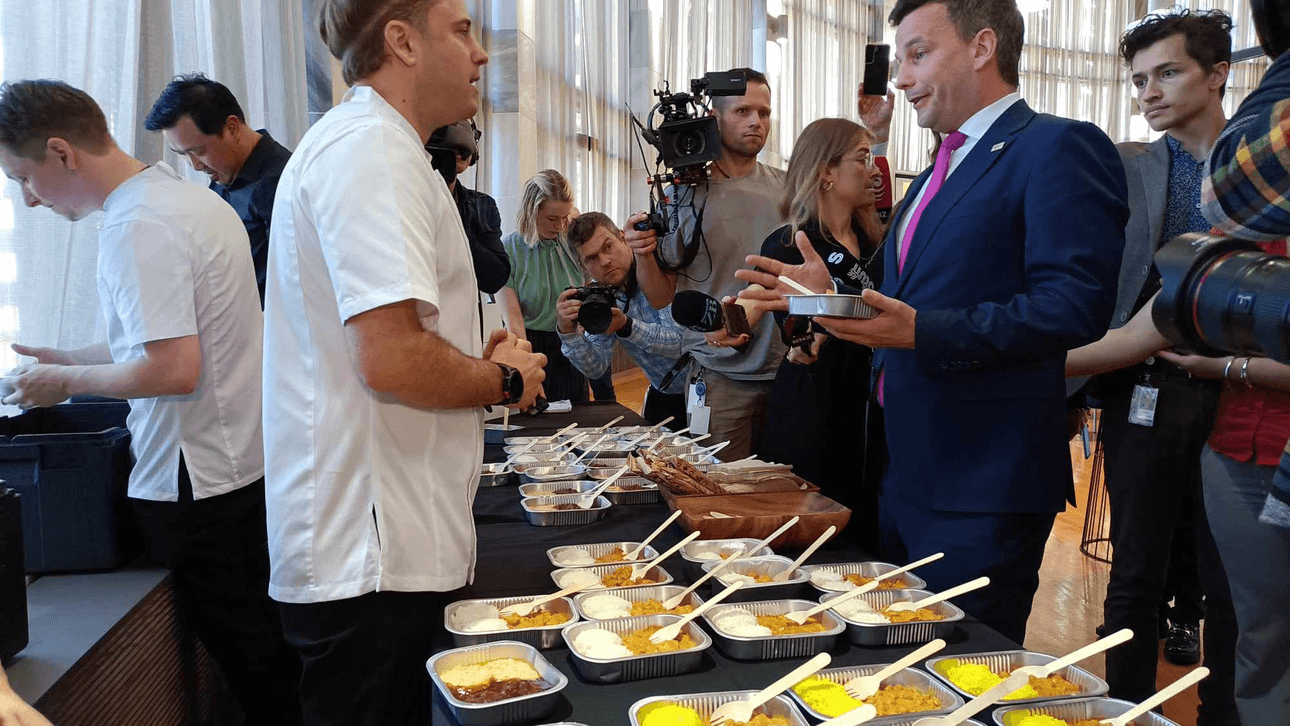
An “alternative provision model” for Ka Ako, Ka Ora – the free school lunches programme instituted by the previous Labour government in 2019 – was announced by associate education minister Seymour in May 2024. To launch in 2025, it would reduce the cost of the programme per student from around $8 to $3, thus saving the taxpayer more than $100 million, said the Act Party leader, who had been a vocal critic of the programme since its inception. He was able to enact the reforms after eliciting a promise in Act’s coalition agreement with National that the government would improve the cost-effectiveness of the programme.
The auditor-general announced an inquiry into the revised programme in May 2025 in response to multiple complaints and concerns, “including the selection of the providers, the quality, timeliness, and appropriateness of the food provided, how the cost of each lunch was determined, and what the ministry communicated with previous providers”. Since its launch at the start of the school year, the programme had rarely been out of the headlines, with criticisms including late and missed deliveries, students being burned by meals, halal meals containing ham and suggestions the meals were unappetising and inappropriate. Seymour admitted there had been some “teething issues”. In March, the main provider of the lunches, Libelle, went into liquidation.
Here are some key points from the auditor-general’s inquiry.
The $3 problem
The $3-per-student figure was decided on after Seymour requested the Ministry of Education meet with children’s charity KidsCan. The auditor-general’s report noted that although the $3 cost “was caveated and did not include delivery or distribution costs”, and the ministry “noted its concerns that the proposed model might not meet students’ nutritional needs”, the price tag remained fixed even as the model changed substantially. Cabinet agreed to a $3 model based on shelf-stable “pack and go” food in April 2024, but after this an expert advisory group was appointed, which in July 2024 proposed a revised model with hot lunches. “It retained the $3 a meal cost despite feedback from suppliers and schools that this might not be achievable.”
Nutritional concerns from the outset
“Nutritional compliance does not appear to be managed appropriately or in a timely
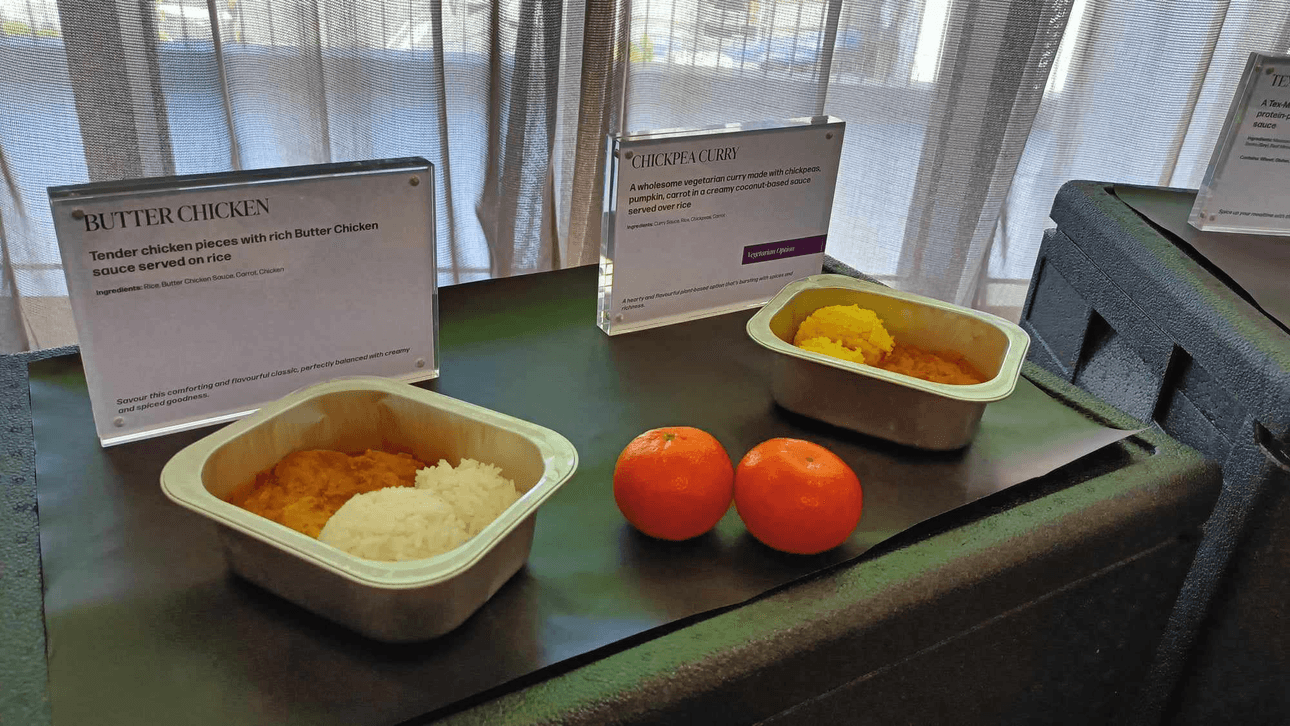
manner,” according to the report, which said that between May 2025 and December 2025, just over 50% of meals assessed by the Ministry of Education complied with the nutrition standards. “Because these measures are reported once a term and the ‘buffer stock’ in storage needs to be used before new lunches are prepared, it takes a considerable amount of time for any issues to be remedied. It is also unclear to us how the different methodologies for assessing nutrition standards would enable consistent and meaningful oversight of nutritional compliance.”
Waste and surplus issues worse
“Reducing waste and surplus were conveyed as key priorities when implementing
the alternative provision model,” said the report. “Despite this, waste has been measured only once through a survey in term 3 of 2025.” That survey showed that lunches had 8.82kg of waste for every 100 lunches, above the target of ≤7kg.
This level of waste is “significantly higher than iwi/hapū providers and schools operating under the internal model,” noted the report. “It is unclear how the ministry, together with the School Lunch Collective [the provider contracted to run the programme], is seeking to effectively monitor or minimise waste.”
Surplus rates (the number of unopened, uneaten meals), meanwhile, are higher than the maximum level set in the performance measures (at or below 10%) and rates are increasing. “We understand that surplus rates for the School Lunch Collective have increased to 17% in 2026,” said the report.
In Auckland, Waikato and the Bay of Plenty, the trays used in lunch packaging are recycled, with other non-recyclable components going to landfill. In other regions (where 57% of schools are located), all lunch packaging is sent to landfill. “The ministry has said that the aim is to roll out recycling nationally. It is unclear whether this has taken place.”
Fairness concerns with procurement process
The Ministry of Education issued a procurement tender, or registration of interest (ROI), in August 2024, seeking a provider or providers that could supply lunches to students in years 7 and above at a cost of no more than $3 a student each day. The following month, after the ROI had closed, the model was expanded to include students in years 0-6, even though this cohort had been explicitly excluded in the original scope, and existing suppliers had been told their years 0-6 contracts would be extended beyond 2024. Some had made investment decisions on that basis, said the report, but were now told their contracts would end in December. “In our view, the ministry’s inconsistent messaging and short notice to existing suppliers did not reflect good supplier management practices.”
What’s more, changes were being made to the model while the ministry was engaging with the market and during contract negotiations with the School Lunch Collective. “This gives rise to concerns about fairness, especially for those suppliers who withdrew from the procurement process after concluding that they could not provide all aspects of the alternative provision model for the $3 a meal cost signalled to the market,” said the report.
Of 134 applications, 20 organisations were shortlisted for preliminary discussions and were told that the $3 cost was non-negotiable, but there were inconsistencies: while the ROI had said delivery had to be included within that cost, potential suppliers were told that “nutritional compliance, meal variety, and delivery costs for isolated schools and in-school delivery were aspects that could be ‘traded’ during negotiations”, said the report.
The ministry didn’t hold discussions with all 20 shortlisted suppliers before ruling them out, noted the report, which “introduced a probity risk and could make the process subject to challenge”. Eighteen of the organisations were ruled out due to not being able to meet the $3 cost, then a 19th eventually excluded itself for the same reason. That left just the School Lunch Collective, a consortium of suppliers consisting of Compass Group Limited and Libelle Group Limited as meal providers and Gilmours Limited as a distributor. Compass and Libelle had provided school lunches under the previous school lunch model, but “the ministry noted concerns about the financial viability of Libelle and the past performance of two suppliers in the consortium”.
In a cabinet paper in September, Seymour said there had been a “strong response from the market” which allowed for different delivery models to be considered, the report noted. “This was despite only one consortium remaining, and uncertainty about whether it could provide adequate lunches for year 9+ students within the cost cap of $3 a student.”
Not going back to the market after cabinet approved changes to the model was singled out in the report as “particularly concerning”.
The School Lunch Collective ended up receiving extra funding to provide additional food to students in year 9 and above to meet nutrition standards, changes made “despite statements in the ROI that respondents had to be able to ‘deliver’ the lunches for $3, with no room for cost increases over the two years of the contract… In our view, this raises issues of fairness to the market and risks undermining the trust and confidence of suppliers and the public”.
The KidsCan contract
The report also expressed concerns in the way KidsCan was contracted in October 2024 to provide a targeted food programme for early childhood centres. While no evidence of predetermination was identified, “there is a combination of circumstances that could give rise to that perception”, it said. The charity, after meeting with the ministry at Seymour’s request, had put in an “unsolicited bid” for funding to support its existing early childhood food programme. This information was not shared with the procurement team. Soon after, a cabinet paper seeking approval for funding for the early childhood programme contained “a highly specific description of the type of organisation that should be funded to provide this programme”, which “effectively reduced the pool of potential suppliers to just one provider”.
The ministry had even sought informal advice on potential conflicts of interest from the auditor-general on this very matter, following the October 2024 publication of a critical letter on the way funding was awarded to mental health charity I Am Hope. KidsCan’s “unsolicited bid” was not revealed, however. “We advised that a conditional grant could be a reason to opt out of a competitive procurement process. However, we also advised that a public organisation must not design or structure a procurement as a conditional grant to avoid applying the [government procurement] rules.”
Risks identified early on, but not addressed
The report noted that multiple risks were identified in the early stages of the planning process. In March 2024, a briefing report provided to Seymour said that “compared with the previous programme, the proposed model could increase burden on schools, affect the health of students, and increase cost of living pressure for whānau and families”, as well as identifying a number of other risks.
But due to time constraints, the alternative provision model was put into place without a finalised approach to contingency planning. “We consider that the ministry’s contingency planning was inadequate for a programme of this size, scale, and risk, particularly given the previous performance of key suppliers,” noted the report. “Financial stability, production capacity, and quality risks materialised early in the school year and Libelle went into liquidation in the early days of the programme.”
The Ministry of Education’s special projects team, which had led the previous school lunch model, had repeatedly raised concerns that “the briefings and draft cabinet papers to the associate minister had minimised the proposed model’s operational risks and implications”, said the report. Tensions among teams within the Ministry of Education as well as between the ministry and Seymour’s office led to involvement in the project being limited to certain staff in the policy, procurement and operations teams. “Ministry staff told us that this meant there was not always effective communication between the teams about decisions that were being made.”
Is the programme serving its purpose?
“A goal of the Healthy School Lunches Programme was to reduce food insecurity and support educational outcomes, such as attendance rates and student achievement, by providing nutritious meals,” said the report. “Although the overall cost of the programme might have reduced, if students are not eating or only partially eating meals, or if the meals are not nutritionally sound, the programme might not be achieving all its intended outcomes.
“It is unclear how the ministry is measuring or assessing the wider impact of the programme in improving food security and educational outcomes.”
The Ministry of Education was given the opportunity to comment on the draft report, and its statement is included as an appendix. “Since the 2024 procurement and the challenging start to the cost-effective model in 2025, the programme has implemented significant improvements to processes, monitoring, and reporting,” noted the statement. The report acknowledged this, saying: “Monitoring arrangements seem to have improved over time, with regular reporting on some aspects of the programme. However, more broadly, earlier reliance on partial and self-reported data, together with changes and inconsistencies in measurement approach, limit the accuracy and reliability of the evidence base. This constrains the ministry’s ability to meaningfully assess performance over time.”
Update, 2.15pm:
In a statement provided to media, Seymour said the Audit Office “favoured process over outcomes, and the disgruntled over reality. By making the programme more efficient I have saved the taxpayer $360m and counting. The Auditor-General should be happy about this outcome. Reading the report, it feels like the Auditor-General would be happy if we spent another $360m to get the same outcome, so long as we followed his preferred process.
“More generally, the report acts as a rear-view mirror, telling us what we already knew. There were some teething issues at the start of the programme, and they were addressed. With any contract delivering a quarter of a million meals to a thousand schools, there will be the need for constant management, which we provide.
“We accept there is a challenge regarding surplus. In the last couple of weeks we have seen surplus come down slowly due to the ministry working with schools to help them order meals to attendance. Further changes are underway to bring it down further, including improving menu variety, quality, and responsiveness to school feedback.”